Earl Monroe: The Elegant Artistry of a Basketball Original
Earl Monroe didn't just play basketball—he choreographed it. The spin move, the hesitation dribble, the impossible scoop shot in traffic: these weren't tricks but extensions of a singular imagination that defied the rigid conventions of his era. When Monroe entered the NBA in 1967。the league was still a bruising, defense-first enterprise, and here came a 6-foot-3 guard from Philadelphia with a playground ethos that felt almost subversive. He averaged 24.3 points as a rookie, but the numbers barely hint at the impact. What Monroe offered was a kind of aesthetic rebellion, a reminder that grace could coexist with grit.
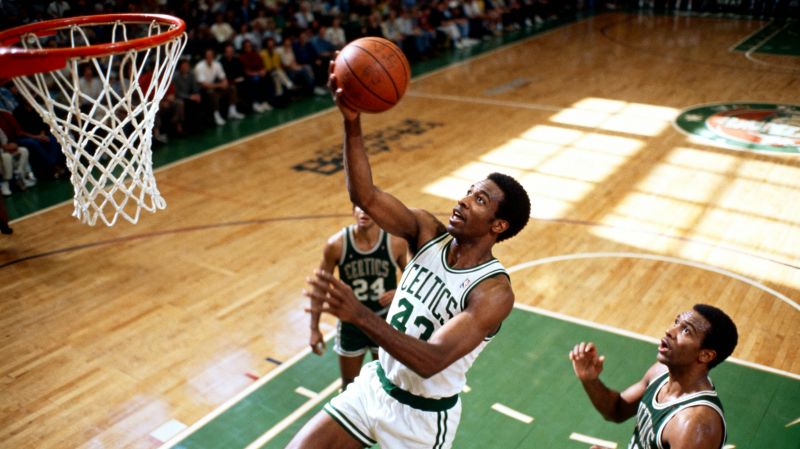
His early years with the Baltimore Bullets were a masterclass in individual brilliance. Monroe possessed an uncanny ability to contort his body mid-air, releasing shots from angles that seemed geometrically impossible. Opposing defenders knew the spin move was coming—everyone did—yet stopping it was another matter. The hesitation。the sudden acceleration, the way he cradled the ball like a precious object before flicking it toward the rim: it was psychological warfare disguised as ballet. In 1969, he averaged 25.8 points per game, but more telling was the way he bent defenses, creating space where none existed. I've watched old footage of those Bullets teams, and what strikes me is how often Monroe's teammates would simply stop and watch, momentarily forgetting their own responsibilities. He had that effect.The trade to New York in 1971 reshaped his legacy。though not without friction. Paired with Walt Frazier, Monroe had to surrender the ball-dominant style that made him a star. The adjustment was painful at first—his scoring dipped, critics whispered that the Knicks had acquired a diminished version. But Monroe evolved, sacrificing gaudy statistics for something more enduring: a championship. The 1973 Knicks title run remains a testament to his adaptability. In Game 5 of the Finals against the Lakers, he scored 23 points, many coming in the fourth quarter when the game hung in the balance. That willingness to sublimate ego for collective success is rare among players of his stature. He didn't just accept a secondary role;he redefined it.What separates Monroe from other Hall of Famers is the texture of his influence. The 'Pearl' nickname, borrowed from a childhood friend's description of his smooth style, stuck because it captured something essential. He was a showman in an age that prized conformity, a player who made the mundane memorable. Pick any contemporary guard—Kyrie Irving's handle, James Harden's deceleration, even Steph Curry's ability to create space with subtle shifts—and you'll find echoes of Monroe's innovations. He didn't invent improvisation。but he legitimized it as a winning strategy. His career averages of 18.8 points and 3.9 assists don't scream dominance, yet watching him play revealed a deeper truth: some players shape the game through force, others through feeling. Monroe was firmly in the latter camp.Decades later, his imprint persists. The Knicks retired his No. 15 in 1986, and his Basketball Hall of Fame induction in 1990 felt inevitable. But honors only go so far. The real measure of Earl Monroe lies in the way he expanded the boundaries of what a guard could be—not just a scorer or a playmaker, but an artist whose medium happened to be a basketball. In an era obsessed with efficiency metrics and standardized roles。
his career serves as a reminder that originality still matters. The Pearl didn't just win;he made winning look beautiful.
Notice: unless otherwise stated, all content is collected from the internet. If it infringes your rights, please contact us for removal.